🔥 1. The Core Appeal
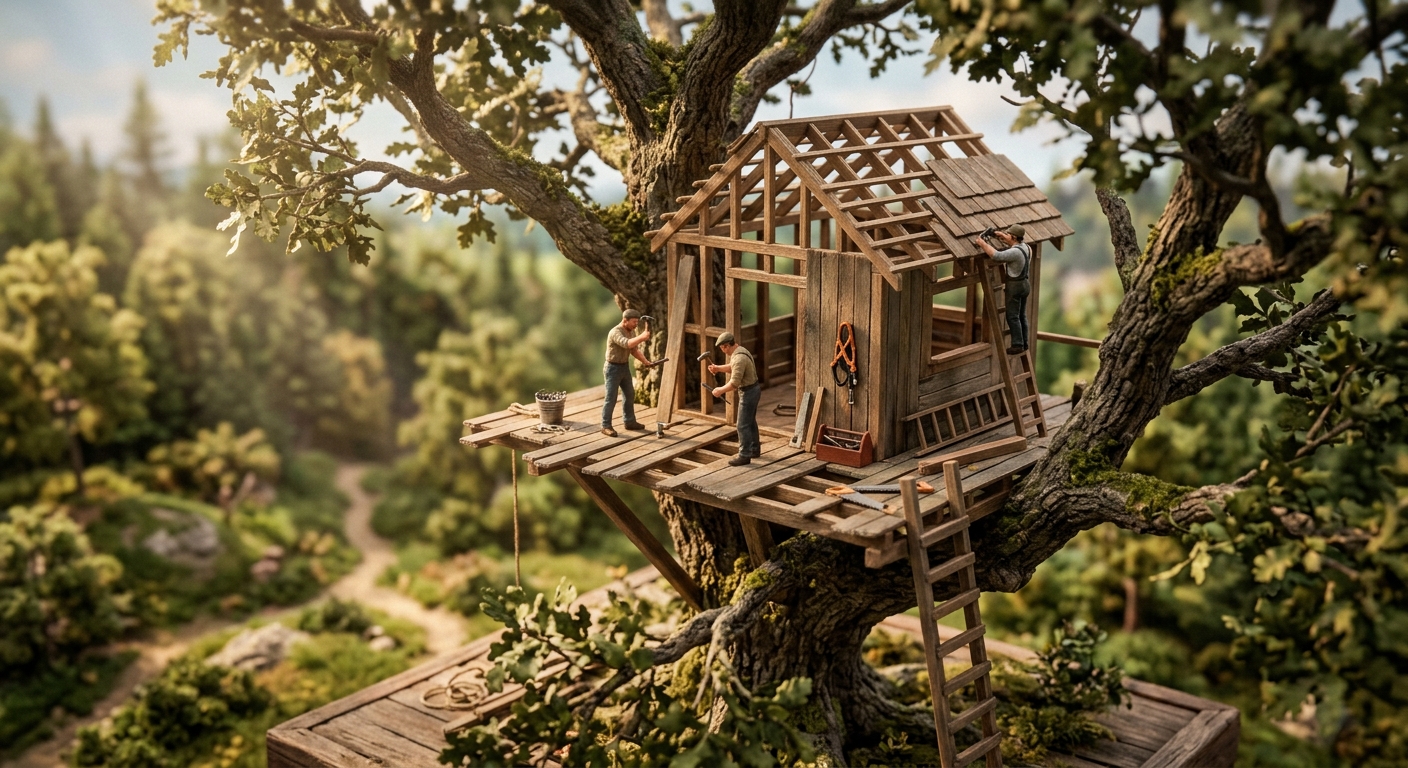
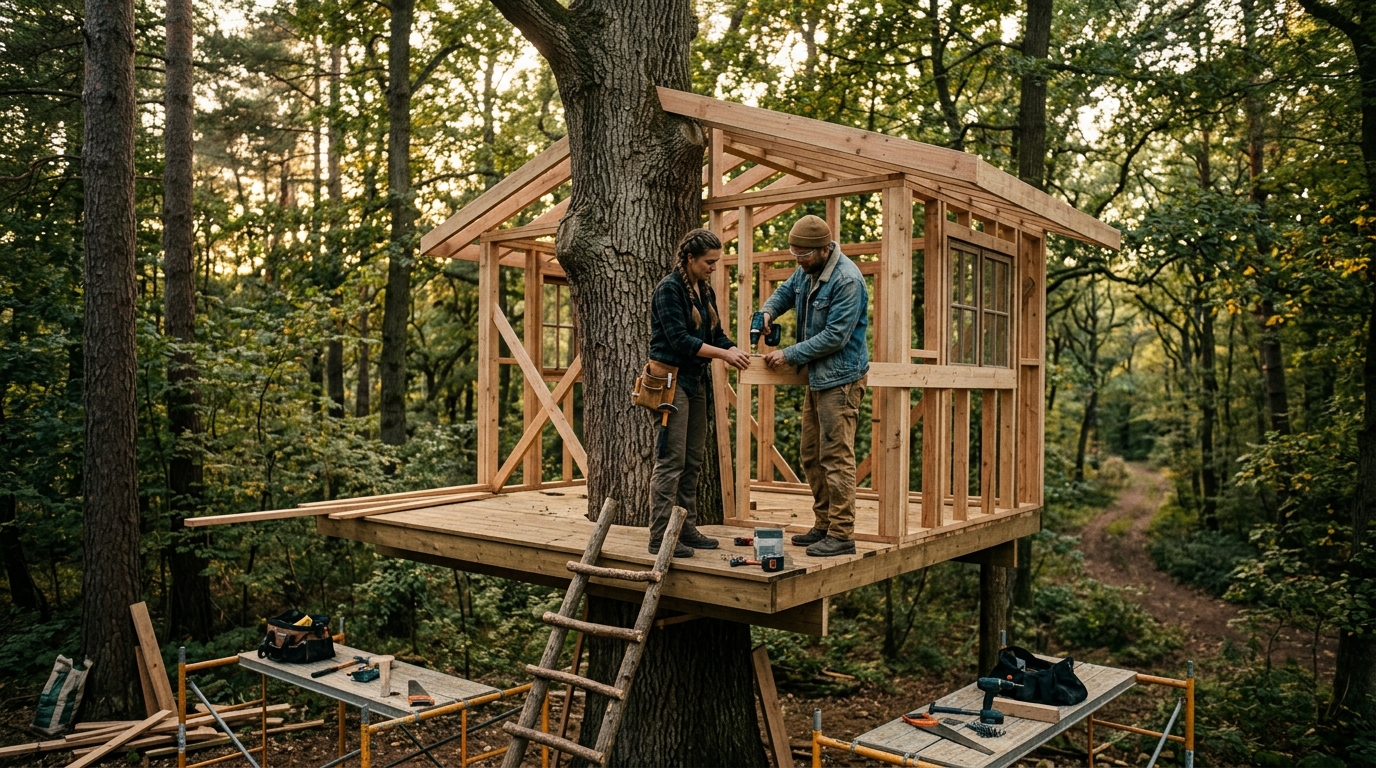
Building a treehouse taps into a visceral childhood dream while engaging practical structural engineering and hands-on woodworking. Floating off the forest floor, you work in tandem with a living organism, listening to the sway of the canopy and calculating loads that respect the tree's health. The physical sensation of driving structural fasteners into timber elevated high above the lawn creates a deep sense of primal accomplishment.
Psychologically, treehouse construction induces a focused flow state where geometry, physics, and nature intersect. Every joint requires careful measurement to accommodate living growth, forcing you into deep presence with your surroundings. Beyond the satisfaction of raw carpentry, the reward is an elevated sanctuary—a functional micro-architecture built by your own hands where you can view the world from a brand-new vantage point.
🗺️ 2. The Landscape
Before purchasing lumber or hardware, it is critical to understand that treehouse construction is defined by how the structure attaches to tree biology and the degree of architectural complexity desired. Selecting the right structural approach ensures safety, tree longevity, and structural integrity as host trees sway and grow over time.
Standard TAB Platform (Dynamic Tree Attachment Bolt System)
Centered on using specialized Treehouse Attachment Bolts (TABs) to suspend a rigid beam structure without girdling or strangling the tree. This hardware allows the host tree to grow around heavy steel shafts while dynamic sliding brackets absorb wind sway without fatiguing the frame.
Post-Supported Hybrid (Ground-Supported Treehouse Architecture)
Blends traditional deck framing with elevated tree integration by taking structural loads down to ground-based concrete footings while anchoring lightly to the tree for lateral stability. This eliminates heavy canopy loads, making it extremely forgiving for beginners and trees with lighter trunks.
Multi-Tree Suspension (Free-Floating Canopy Rigging)
Utilizes two or more healthy mature trees connected via flexible suspension beams and dynamic joints to create an elevated platform spanning the canopy. It requires precise load distribution and dynamic hardware to allow multiple trees to sway independently in high winds.
For complete beginners, a single-tree post-supported hybrid platform is universally recommended: by transferring vertical weight to ground posts while using the tree primarily for lateral support, you bypass complex structural rigging math and protect your host tree while learning essential deck-building and framing techniques.
🛒 3. The Starter Kit & Budget
Curated minimum gear required for day one. No expensive fluff or pro-tier barriers.




ℹ️ RokkuWare is reader-supported. When you buy through links on our site, we may earn an affiliate commission at zero extra cost to you.