🔥 1. The Core Appeal

There is a quiet, almost magical thrilling tension in taking a sharp blade to a rare leaf node and setting it into a specialized propagation medium. Watching a dormant stem node swell, push out a pale root tip, and unfurl a brilliant new leaf offers a deeply tactile connection to natural biological forces. It shifts your relationship with houseplants from passive maintenance to active botanical creation, allowing you to multiply striking foliage like Monstera albo, rare Philodendrons, or exotic Anthuriums right on your windowsill.
Beyond the calming daily routine of checking root progress and managing ambient humidity, rare plant propagation carries a rewarding community and trading culture. Every successful cutting becomes valuable living currency to trade with fellow collectors or gift to friends. The psychological flow state comes from balancing delicate variables—moisture, oxygenation, ambient light, and sterile technique—to nurse fragile botanical tissue into independent, self-sustaining plant specimens.
🗺️ 2. The Landscape
Before acquiring specialized greenhouse cabinets or expensive cloning reagents, understanding the fundamental mediums used to trigger root growth in stem cuttings is essential. Different rare species react uniquely to moisture levels, oxygenation, and humidity, making medium choice the primary lever of propagation success.
Water Propagation (Simplicity & Visual Tracking)
This classic method involves suspending a node cutting in sterile water inside clear glass vessels to easily observe root initiation. It provides immediate visual feedback and zero upfront medium prep, though water-grown roots must carefully adjust when later transitioned into solid soil.
Sphagnum Moss & Perlite Blends (High-Humidity Moisture Balance)
Air-fluffed damp sphagnum moss paired with coarse perlite creates an airy, moisture-retentive matrix ideal for delicate tropical aroids. It minimizes root rot risks by maintaining critical air pockets directly around sensitive embryonic root initials.
Tree Fern Fiber & Stratum (Advanced Rooting & Nutrient Support)
Premium coarse tree fern fiber or volcanic fluval stratum offers superior drainage and natural mineral support for ultra-rare or rot-prone cuttings. It encourages dense secondary root branching rapidly without suffocating the developing growth point.
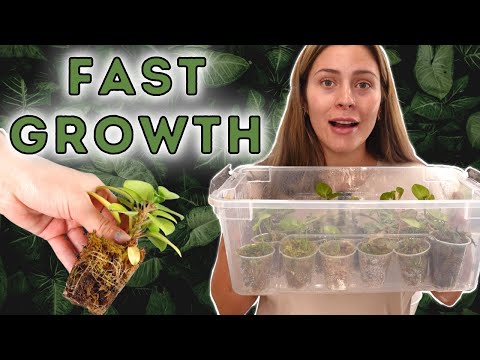
For complete beginners, a moist sphagnum moss and coarse perlite mix in a clear plastic cup is universally recommended: it provides the perfect balance of moisture retention and root aeration while letting you inspect root growth without disturbing fragile tissue.
🛒 3. The Starter Kit & Budget
Curated minimum gear required for day one. No expensive fluff or pro-tier barriers.



ℹ️ RokkuWare is reader-supported. When you buy through links on our site, we may earn an affiliate commission at zero extra cost to you.